
Two Kids, No Village
The honest truth about raising kids abroad, and what actually helped me get through it
Before I moved to New Jersey, everyone had opinions about my future. My mother-in-law said life would be more settled there — no power cuts, no traffic, no chaos. My family said the career growth was real, and we would regret it if we didn't go. My own aunt said I would finally have time to focus on myself, which is the funniest thing anyone has ever said to me in retrospect. My own mother cried and then packed me twelve boxes of masalas, as if cumin could substitute for her presence.
Nobody told me about the village I was leaving behind.
In India, you don't raise a child alone. A whole neighborhood raises a child. Dadi is two rooms away. Maasi drops in without calling. The neighbor aunty — the one who always smells faintly of agar Batti and unsolicited advice — is somehow always there exactly when you need her most. You don't know you need her until she is 8,000 miles away and your toddler is running a 103-degree fever at midnight.
The Night, Everything Hit Me
My second was ten weeks old. My older one had just started preschool and was coming home every other day with a new virus. I was running on three hours of sleep, my husband was on a work trip to Boston, and both children were crying simultaneously — as if they had rehearsed it.
I sat on the kitchen floor. Not dramatically. Just... sat. And I thought about my mother's kitchen in Delhi, where someone was always making chai, where the noise was different — warm instead of overwhelming.
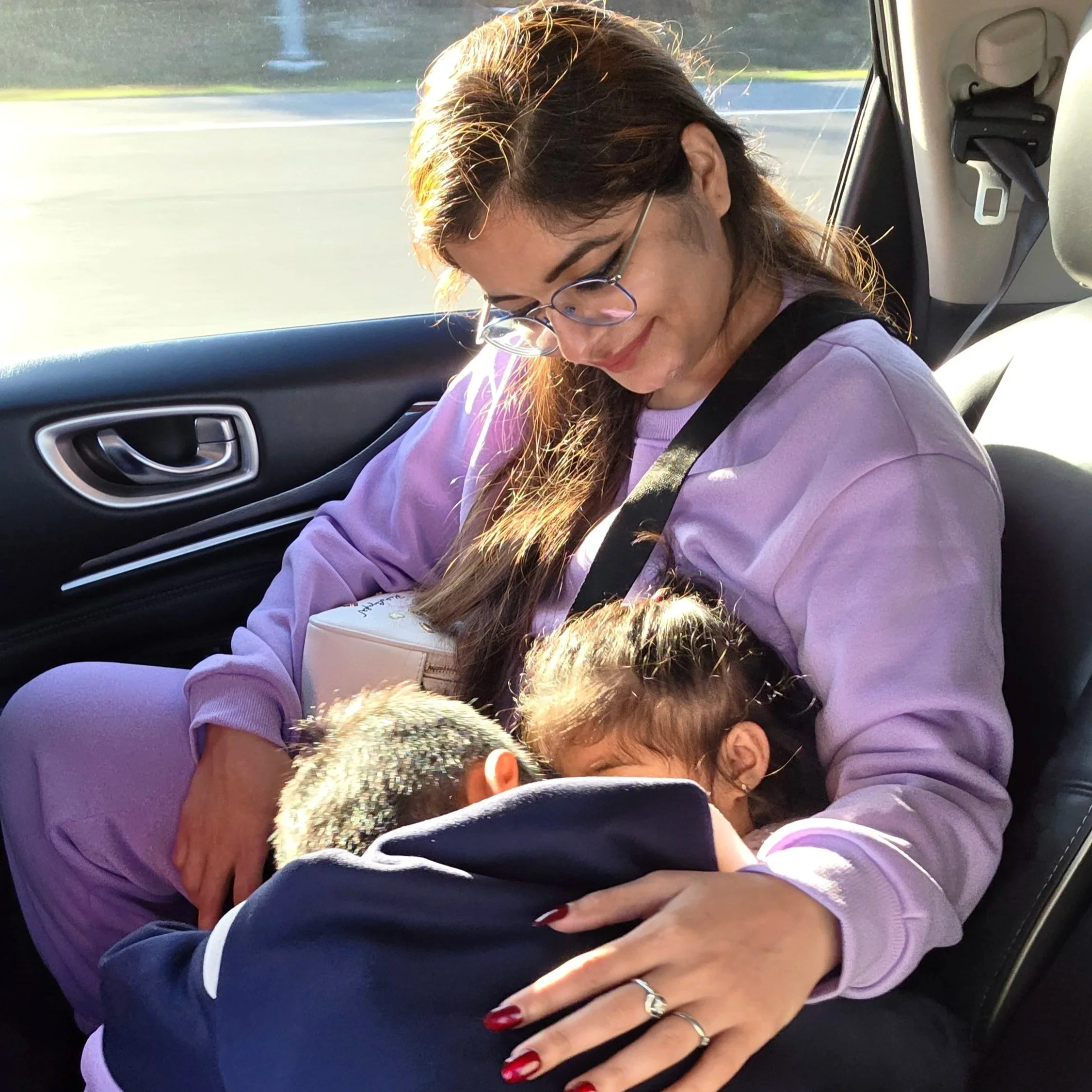
That night, I understood what 'no help' truly meant. Not just the logistical exhaustion of two car seats and two different nap schedules and a diaper bag that weighs more than my self-esteem. I mean the specific loneliness of being the only adult in the room. Always.
The Math of Solo Parenting
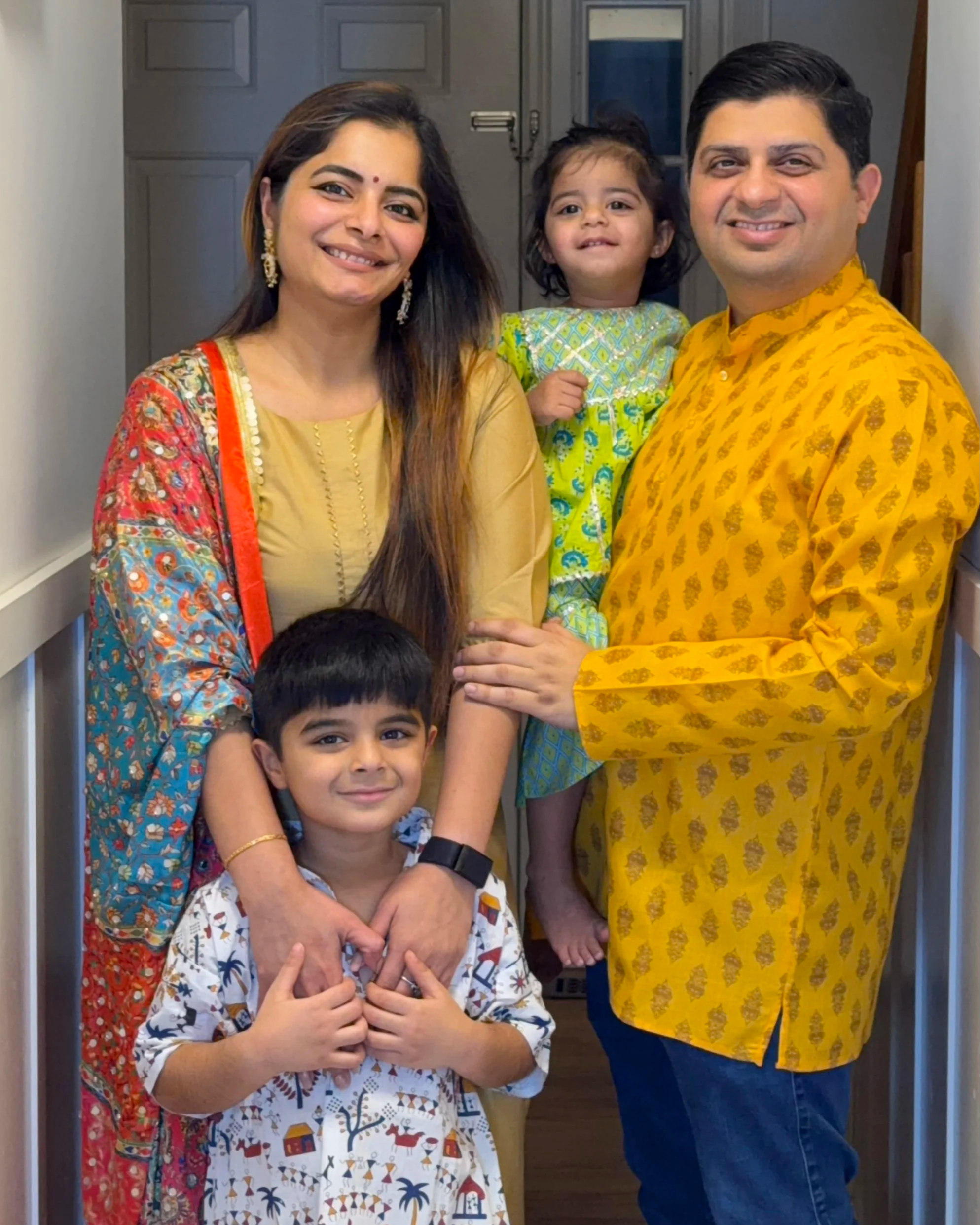
Here is what a typical Tuesday looks like: wake up before the kids, make lunches, dress myself, dress a five-year-old boy who has decided he only wears pants with pockets, feed the baby, do school drop-off in my coat over pajamas, come home, do laundry, answer work emails, pick up, make dinner, do bedtime, collapse.
There is no handoff. There is no "can you just hold her for five minutes." There is no one to make you a plate of food when you forget to eat. In India, I would have been scolded into sitting down and eating. Here, I sometimes realize at 4 PM that I have had only coffee.
What I Actually Did About It
I want to tell you how I dealt with it — not the Instagram version where I discovered inner strength and everything became beautiful. The real version. The messy, took-me-way-too-long version.
I let myself grieve first. For a long time, I told myself and everyone else that I was managing great. That it was fine. That lots of people do this. All of that is true. It is also true that it is genuinely hard, and both things can be real at the same time. So, I stopped performing okayness. I told my husband directly: I am not fine on days when both kids need me, and I haven't eaten and no one is coming. He heard me positively when I said it instead of overreacting on the emotions. We started actually problem-solving on things as a team instead of me silently resenting and him obliviously watching movies.
I got specific about asking for help. We as moms — and I say this with full self-awareness — are terrible at asking for help. We were raised watching women who did everything and made it look invisible. Asking felt like admitting failure. I had to unlearn this completely. I started asking for help specifically to my husband: Can you take Aarush to soccer on Thursday, and I can take Prisha for doc appointment? Can we swap pickups this week? Not the vague "let me know if you need anything" that nobody ever follows up on. The specific, time-bound ask that is easy to say yes to. And here is what I found: most people said yes. People want to help. They just need to be asked in a way they can act on.
I built a rhythm for my own sanity. When the kids are small and every day feels like I am improvising my own life, I made one shift that changed everything: I stopped improvising. I built a loose structure — not a rigid timetable, a rhythm. Mornings are the same sequence always. Evenings are dinner, bath, family time, bed in that order, every time. The structure is not for the kids. It is for me. When I know what is coming next, I will stop spending energy dreading it. That energy goes elsewhere — sometimes to actually enjoying my children, which sounds funny to say but is very true.
I made peace with good enough. The version of motherhood in my head was based on watching my mother, who had her mother around and her sister and the whole ecosystem of family. She looked effortless. Everything was homemade, fresh, organized. I am one person. I am not effortless. I am trying. Some days dinner is daal chawal and that is a complete meal. Some days the house is messy and stays messy. Some years the Diwali decoration is slightly less because I had a deadline at work. Good enough is not giving up. Good enough is sustainable. And sustainable is what keeps you in the game for the long run.
I invested in friendships like they were savings. The friends I have here did not appear. I built them slowly — through shared playdates and desi potlucks and the gradual work of choosing people and letting yourself be chosen. I said yes to the uncomfortable event. I initiated the text. I offered help first — dropped dinner off when a friend's baby was sick, took a neighbor's kid to school during their hard week. Community is circular. What you put in comes back, just not always from the same person. Now there are three families in my phone I can call in a real emergency. That number went from zero to five over 9 years. Not fast. But worth everything.
I called my mother and stopped feeling guilty about it. Somewhere I had absorbed the idea that needing your mother as an adult was clingy. That I should be self-sufficient enough not to need her voice in my kitchen while I cooked dinner. I dropped this idea entirely. I call her almost every day. Sometimes five minutes, sometimes an hour. She knows which is my son’s favorite teacher, what my daughter is obsessed with this week, which achar I ran out of. She gives advice I don't always take. I give advice she definitely doesn't take. And somehow, we have stayed close across a distance that could have made us strangers. Long-distance family is still family. You just have to tend it more intentionally.
Some Days I Still Sit on the Kitchen Floor
Dealing with it does not mean transcending it. I still have days when I am tired in a bone-deep way that sleep doesn't fully fix. I still miss having family around in ways that sneak up on me — at birthday parties, on sick days, on random Tuesday evenings when I would give anything for my mother to just be in the next room.
But I also know now that I am capable of more than I thought. That I have built something real here — a life, a community, a family that is rooted even without the deep soil of extended family beneath it. That my children are loved and held even in a house where the only adults are their parents.
I didn't have a village. So, I became one. Slowly, imperfectly, one act of showing up at a time.
And that, I think, is enough.
thecozydesimom.com | Mom Hood